
The call that arrives while you are working
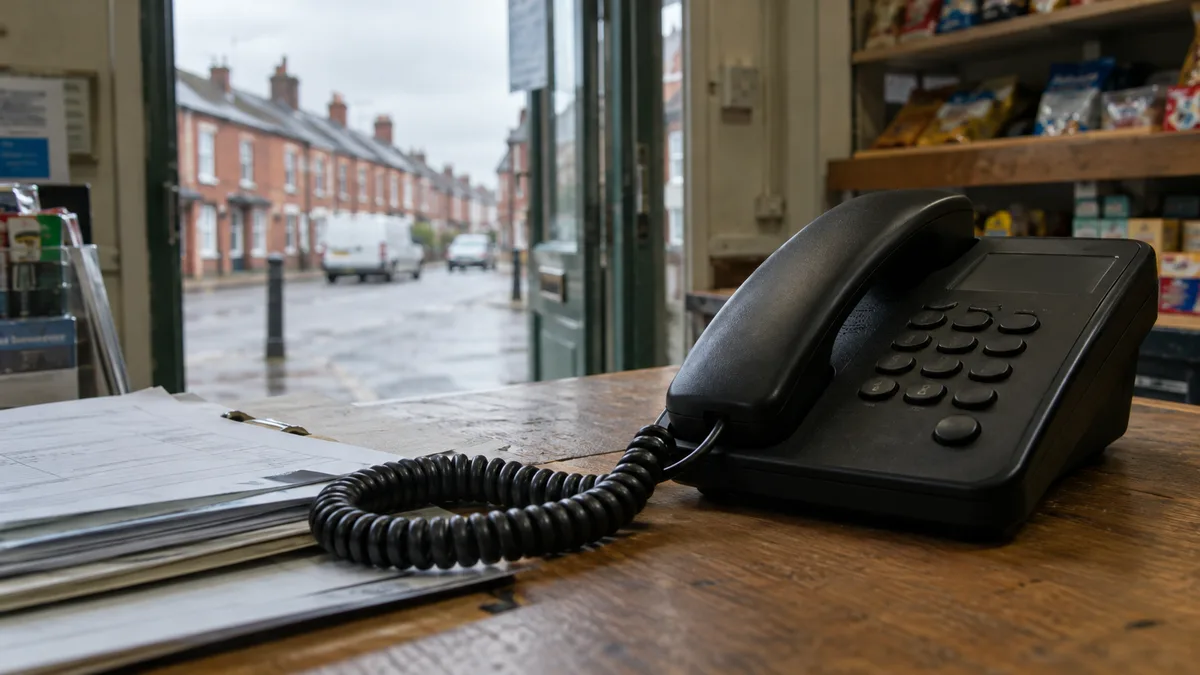
You are halfway through a job when the phone goes, and the voice on the other end is confident, friendly and in a hurry. There is a problem with your website, or with your Google listing, and the caller can put it right today. Nothing about your site has changed since yesterday. That is the point: the problem exists only because somebody needs it to.
Most owners ask two questions after a call like that, in this order: was it a scam, and what should I have checked? The honest answer is that the questions mostly share an answer. Some of these callers are running a fraud. Some are real agencies selling a poor product hard, and a poor product at a real price costs real money all the same. One short list of checks covers both, and running it takes less time than the call did.
The two kinds of dodgy offer
The first kind impersonates somebody you already trust, and the favourite costume is Google. The caller says they are ringing from Google about your business listing, warns that it is unverified or about to be deactivated, and asks for payment or account details to put it right. Google's own help page for Business Profile owners says how it actually works: "we'll never ask you for payment information over the phone or guarantee you a special spot in our products." The same page is equally blunt about the response: "If someone calls you pretending to be from Google, hang up."
The second kind is a real company with a real phone list and a poor product. A practitioner account of the cold-call corner of the trade describes callers working from bought or scraped business lists, a quote of several thousand dollars for a template site that takes a few hours to set up, and a monthly retainer afterwards that mostly delivers auto-generated reports. It is one agency describing its own market, so weigh it accordingly. The two kinds differ in legality and agree in behaviour: the call is uninvited, the problem is one you can disprove yourself, and neither sort of caller wants to give you time to think.
The scripts they actually use
Pay to stay. A caller warns that your Google listing will lapse or lose its verified status unless you pay, and the ask is usually small, £25 or £50, small enough to feel easier than arguing. The listing is free. There is no fee that keeps a Business Profile active, so a call asking for one is a scam, whatever name the caller gives.
The verification code trick. The caller triggers a genuine password reset or ownership request against your account, then asks you to read back the code that has just arrived by text, to confirm you are who you say you are. The code is real, which is exactly why the trick works, and reading it back hands over access to your account. The same warning page walks through the mechanics. Google's advice covers the wider family of these calls: "Do not press any buttons even if the voice prompt tells you to."
The reinstatement fee. This one aims at businesses whose profiles were genuinely suspended at some point, so the worry the caller names is real, even though a cold caller promising a quick fix for cash is almost always a scam. The detail that makes it convincing is the same detail that makes it cruel: you already know the profile can be suspended, because yours was.
The website scare. "Your site isn't mobile friendly." "Google is penalising you." The claims are sometimes partly true, which is what makes them useful, but the fix on offer never varies: a new site from the caller, whatever the diagnosis.
The today-only price. Whatever the script, the clock is always running. A price that expires before you have time to check anything is a method rather than a discount, and it works by removing exactly the step this piece is about.
None of these scripts is hypothetical. In November 2022 Google took a company to federal court over one of them, alleging operations that charged small businesses around $99 for services a Business Profile already includes free, threatened that unpaid listings would be deactivated or marked "permanently closed", promised first page rankings and sold fake reviews along the way. The account comes from reported coverage of the suit rather than the court papers themselves, and the shape matches every script above.
Nor has the pressure eased here. The UK's National Cyber Security Centre saw a rise in Google impersonation campaigns aimed at tradespeople in early 2026, as reported by Security Journal UK and summarised by PageLaunch. The calls land where the work is, which is why a plumber in Sleaford hears them as often as anybody.
The red flags in one list
Pull the scripts apart and the same small set of red flags is inside every one of them. The call is uninvited. The problem is urgent, and checking it yourself takes two minutes. There is a guarantee attached, a number one ranking or a first page of Google, and Google's own warning about the trade is short: "No one can guarantee a #1 ranking on Google." The caller is vague about the method, and offers to fix everything before saying what anything is. Where the SEO version of this pitch is concerned, what SEO actually means for a small local business walks through Google's full warning list for judging sellers, so this piece will not repeat it.
Two more flags come from the practitioner account of the cold-call trade. Portfolios offered as screenshots rather than live addresses, because a screenshot cannot be opened and the ones doing the rounds were lifted from template marketplaces. And pressure to sign today, with a price said to be available only today or a claim that only two spots are left this month. One flag deserves a question; several together are a pattern, and the scripts above carry four or five at a time.
Why the cheap one costs the most
The mechanism behind the cheap offer is documented, mostly in American complaint records, so the figures are dollars, but the mechanism travels. An investigation by AARP into website scam complaints quotes the Federal Trade Commission's Lois Greisman: a $50 website starter kit is a teaser rate that exists mainly to generate leads, and those leads sell on for three to four times the purchase price, as much as $200 for one buyer's contact details. The buyer is then worked over by upsell calls offering $3,000 to $15,000 upgrades. AARP reviewed roughly three dozen law enforcement complaints matching the pattern: the average complainant was 68 years old, the average loss came to close to $17,000, and the largest single loss was $67,000.
One complaint from that review is worth retelling because of how ordinary it reads. A 66 year old pool maintenance businessman paid over $11,000 in total after starting with a $50 kit, and the site that was meant to sell his services completed one sale in the end: a single $15 baseball cap.
The National Consumers League's Fraud.org recorded dozens of complaints about fake web developers, with reported losses ranging from $2,500 to as much as $50,000. A typical complaint came from a Texas clothing business that paid $5,000 up front for a website and online shop promised within seven business days, and a month later could not reach the company at all.
Closer to home the arithmetic is in pounds. How much does a website really cost a small business works through the 2026 UK ranges, the running costs the quotes quietly leave out, and the questions that stop you paying for the same site twice.
What a legitimate offer looks like
Knowing what to refuse is half the test. The other half is knowing what a good offer looks like, because a legitimate designer passes the same checks the scammer fails. Ask for live addresses rather than screenshots, and open them. Ask what platform the site will be built on, and expect a plain answer rather than a brand name and a shrug. Expect an itemised price, so the hosting and the care are visible separately from the build. And expect ownership to be settled in writing: whose name the domain sits in, who holds the accounts, and what happens to the site if the arrangement ever ends. The same account of the trade suggests a second opinion before spending more than about $3,000, an American figure from an American market, but the principle scales down with the currency.
There is also a local test, which no script survives for long. A designer whose reputation lives in the same county as your site has more to lose from a bad job than a call centre dialling from a list does. That is most of the case for someone local, and web design in Lincolnshire sets that case out for the county this studio works in.
As for what this studio's own answers look like, the pricing page lists the plans in full and states the exit terms plainly: no notice period, the domain and the accounts in your name throughout, and the copyright in the design and the code transferring to you at launch on a monthly plan, or on final payment for per-project work. The services page does the other thing a good quote does, itemising what is actually included, which gives you something to hold a vague caller's pitch against.
The platform question deserves one honest note of its own. If the answer a caller dodges leaves you wondering whether you could simply do it yourself, Wix vs a web designer works out what the DIY route really costs once your evenings are counted, which is the comparison the teaser price never makes.
If you have already answered
If the call has already happened, none of this requires the conversation to have gone perfectly. Hang up if it is still going, and never read a code back to anybody, however official they sound. If a code has already gone out, the thing it approved was real, so go straight to your own accounts without following any link or number the caller gave you: open your Google account and your Business Profile yourself and check what has changed.
If money has moved, tell your bank first, then report the call to Action Fraud. If a payment has gone to somebody who has now gone quiet, that is the same failure seen from the other end, and what to do when the web designer stops responding is the ten-minute exposure check for it. And if the caller claimed to be Google, checking the profile dashboard yourself, by typing the address, settles the original question faster than anything the caller could have told you.
The questions that come up
Is Google calling about my business listing a scam? If the call is about payment, yes. Google does not phone to demand payment for a Business Profile or to guarantee a special spot in its products, because the listing is free. A caller who does either is not from Google, whatever number the screen shows.
Do legitimate web design companies cold call? Some real firms do, and the pitch is still worth the same scrutiny, because the red flags here are about behaviour rather than legality. The other half of the answer is the quiet one: a designer whose good work keeps them busy has little reason to ring strangers with today-only prices.
How do I report a scam phone call in the UK? Report it to Action Fraud, and tell your bank at the same time if any money has moved.
What should I do if I gave a caller a verification code? The code was genuine and so was whatever it approved, which is how the trick gets its grip. Open your Google account and your Business Profile yourself, typing the addresses rather than following anything the caller sent, and check what has changed.
How can I tell if a web design quote is fair? The same way you tell the calls apart: what the price includes, who owns the domain and the accounts, and what leaving costs, all in writing. How much does a website really cost a small business does the UK arithmetic.
What happens if I have already paid a scam web designer? Tell your bank straight away, then report it to Action Fraud. Expect follow-up calls rather than follow-up work, because the cheap entry exists to sell the upsell, and decline anything new that arrives on the back of the first payment.
Why do web design companies charge such different prices? Because the quotes are rarely for the same product: a template built in a few hours, a real build and an agency project all arrive dressed as a website, and the gaps between the prices are not mistakes.
Every red flag above has a positive version, and the positive version is the part worth reading twice: terms in writing before anybody has to ask. The pricing page lists the plans in full, states that there is no notice period, and keeps the domain and the accounts in your name, and says in writing when the copyright passes to you.