Websites for cafes and tearooms
Websites for cafes and tearooms
One page doing one job well: the menu, the hours and the room, clear enough that somebody on the pavement walks in. From £49 a month, looked after by one person, and yours outright.
- What it costs
- From £49 a month, fixed in writing
- How long it takes
- Live within about a week
- Who it is for
- Small businesses in Lincolnshire
Straight answers
- How much does a website for a cafe cost?
- From £49 a month including VAT, with nothing upfront, covering the build, hosting, security and ongoing changes, and the price is fixed in writing before anything starts. The quotes you will see elsewhere come in a few shapes: a one-page site at a low fixed price with a monthly fee on top, subscription tiers from around £29 a month, hand-coded builds from a few hundred pounds, and free DIY template tools that leave all the work with you. The pricing page sets out what is included at each tier.
- Can I change the menu and prices myself?
- Yes. Menus are built as real pages you edit in minutes, so a sold-out cake or a new special never waits on a developer or a fresh PDF. If you would rather send the change over and have it done for you, that is part of the monthly care.
- What happens to the hours in the quiet season?
- They get changed, in a minute, by you. Seasonal patterns and one-off weeks are edited on the page, and your Google listing takes its own special hours for temporary changes of up to six days, with a closure of seven days or more marked as temporarily closed instead. The quiet months are when wrong hours cost the most, so they are part of the care rather than a job left until spring.
- Do I own my website?
- Yes, completely. The site, the domain and the content are yours. There is no lock-in and no ransom if you ever leave. That is not true of every builder, so it is worth asking whoever you speak to.
Why it matters here
The decision happens on the pavement
Long before somebody walks in, they have usually judged the place from a phone on the pavement: what is in the soup, whether you are open on a wet Tuesday in November, and whether the room looks worth sitting in. Menu, hours and photographs win or lose the walk-in, and most cafe sites make at least one of the three hard to find. Social media is where a cafe shows its personality, and it is worth keeping for that. It is a poor place to answer the soup question, though, and a Google listing works better when it has a real site to point at. If you run a pub or restaurant rather than a cafe, the pubs and restaurants page covers table service and events instead.
A site built for that job keeps the menu as real text you can change yourself in a minute, the hours true in October as well as August, and photographs of the room doing the inviting. It also carries the allergen information the law now expects. Since Natasha's Law took effect in October 2021, food prepacked on the premises for direct sale must carry a full ingredients list with the 14 specified allergens emphasised, and where orders come in by phone or online, allergen information must be available before the purchase and again at delivery. Done properly it is a legal duty, and it reads to customers as a kitchen that has its house in order.
All of it is built and looked after by one person in Lincolnshire rather than a ticket queue, from £49 a month including VAT, and the site, the domain and the content are yours outright.
What actually fills the room
- Menus in real text you edit yourself
- A proper web page rather than a PDF or a photograph of the chalkboard, so it loads fast on the pavement, search engines can read it, and a price change or a new special takes a minute without a call to anybody.
- Hours that stay true through the quiet months
- Seasonal opening, bank holidays and the winter pattern changed on the site in a minute, so October does not still say August. Your Google listing needs the same change: its special hours cover temporary changes or closures of up to six days, and a closure of seven days or more should be marked as temporarily closed instead.
- Photographs of your room, not somebody else's
- The room, the cakes and the light on the tables, shown photo-first so the place sells itself from the pavement. Your own photographs do this best, because a customer can tell your room from a stock picture.
- A booking or enquiry route that suits the trade
- Walk-in cafes need directions and a number a thumb can tap. Tearooms taking afternoon tea sittings need booking enquiries that carry the sitting times. Either way, it is one tap on a phone.
The difference
Secure by default, not as an afterthought
A cafe runs on email in both directions: stock orders and invoices to suppliers, confirmations to customers booking a table. That is exactly the traffic the bank-detail switch scam imitates. A spoofed email that looks like your invoice tells a supplier your bank details have changed, and the first anyone notices is an unpaid bill or a missing delivery. Every build includes email authentication (SPF, DKIM and DMARC) as standard, which makes sending email as your business far harder, alongside encryption and hardened settings. The invoice fraud guide on this blog explains the scam and the phone-call habit that stops it, and the free security check grades your own domain in seconds.
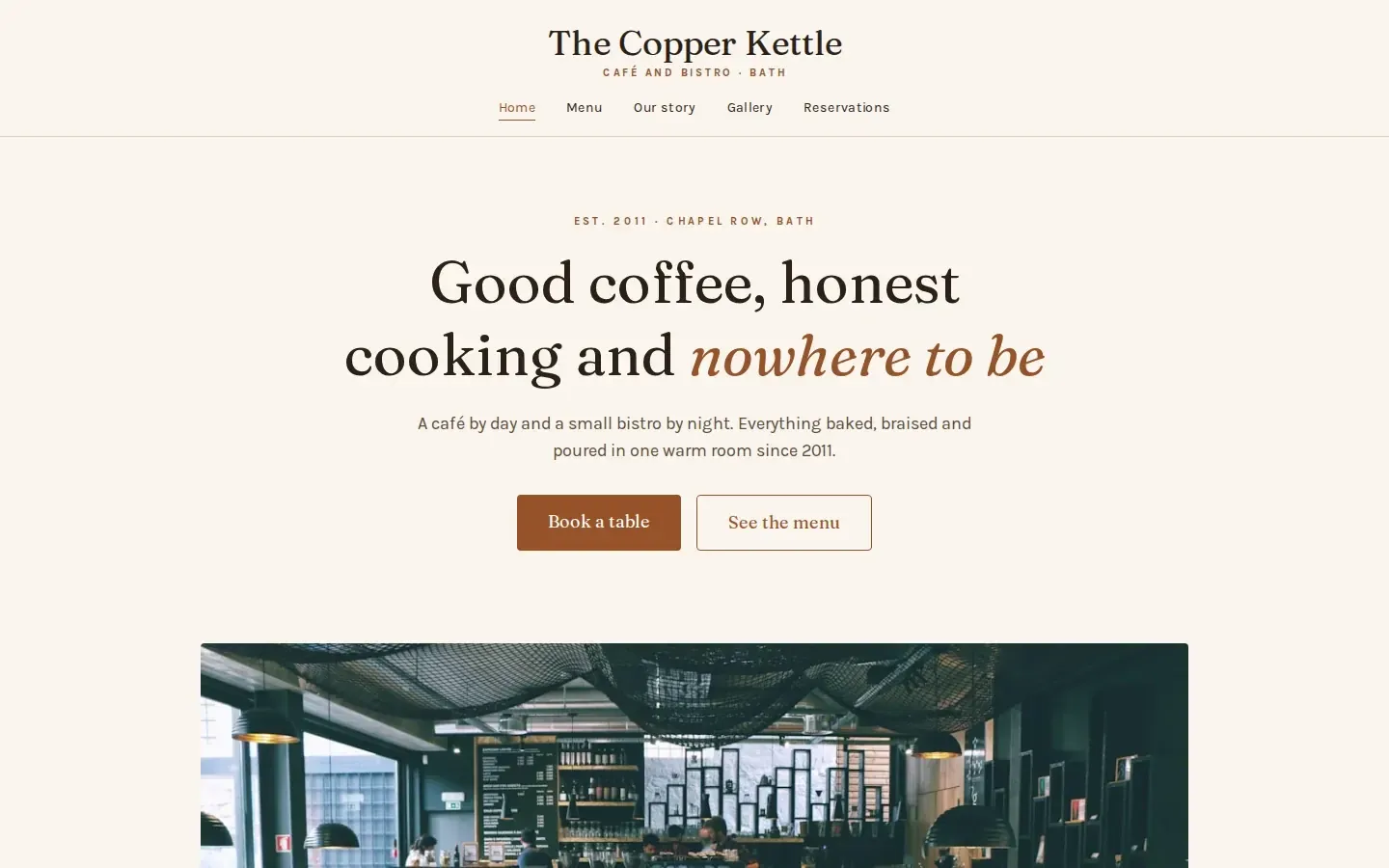
The Copper Kettle
A fictional independent café and bistro in Bath. A warm, editorial design with brunch, lunch and evening menus, a photo gallery, and a table booking enquiry form.
A demonstration build for a fictional cafe and bistro in Bath, with the menus, photo gallery and table booking enquiry a real cafe or tearoom needs. Nothing in it is a client.
A fictional business created to show build quality. Not a live client site.
View live demo, The Copper Kettle (opens in a new tab)Related pages
Trades I build for
Ready when you are
See where your domain stands in seconds, free and with no email needed. Or tell me about your business and I will send back a friendly, no-pressure quote, usually within one working day.