Blog
Guides in plain English
Websites, email security and being found online, explained without the jargon, for the people actually running a small business.

Latest guide
Web design scams and cold calls: how to spot a dodgy offer
Most dodgy web design offers give themselves away in the first minute: they arrive uninvited, they claim a problem you can disprove in two minutes yourself, and they want money or a code today. Google does not call to demand payment for a listing that is free, and no honest designer needs to cold call, because good work keeps them busy. If the caller is rushed, guaranteeing results and vague about exactly what they would do, end the call, check your own accounts directly, and judge any real quote against the ownership terms it puts in writing.
More guides
Website handover checklist: what you should walk away owning
You should walk away owning five things: your domain, the email that controls everything else, the site itself with a dated copy of its files, the copyright in what you paid for, and your Google Business Profile. Access is not ownership: an account somebody else created and bills to their own card is theirs to revoke, whatever access they have granted you. And the copyright in the design and code only changes hands if it was assigned in writing and signed, because paying the invoice does not do it.
What SEO actually means for a small local business
SEO stands for search engine optimisation, and it means the ordinary work of making your website easy for Google to understand and worth showing to the people searching. For a small local business most of that work is free and yours to do: say plainly what you do and where you do it, keep a complete Google Business Profile, keep the site quick and current, and let real reviews and real local links build your name. There is nothing to buy that guarantees a ranking, because Google says plainly that nobody can guarantee one, and the honest timetable is months, not days.
Website contact options: form, email, phone or WhatsApp?
Give customers two or three ways in, one of them a phone number, and make every one of them something you genuinely answer. The contact form is the fallback for people who are not ready to talk, not the front door; the phone is the front door for trades and urgent work; WhatsApp is what UK customers already use, and it works best for businesses with a book of regulars, but it comes with data-protection duties and an expectation of a reply you should meet before you publish it.
Choosing a domain name: .co.uk, .com and what to avoid
For most small UK businesses the right domain is a short, speakable .co.uk that matches the business name, registered at an independent registrar in the business's own name, with the .com bought alongside as cheap insurance if it is available. Run three checks before paying: the trademark register on GOV.UK, Companies House, and how the name sounds said once down a phone. Then treat any letter about your renewal from a company you have never dealt with as junk until you have verified the real expiry date yourself, because those letters are a documented scam aimed at exactly this moment.
Why an accessible website wins more customers
Website accessibility means building your site so that disabled people can actually use it: readable text contrast, descriptions on images, labelled form fields, a page that works from a keyboard. It matters to a small business for a blunt reason: a quarter of the UK population is disabled under the Equality Act definition, and the research shows most will leave a site with barriers and buy from whichever competitor has fewer. Almost none of the fixes cost money, the UK law asks for reasonable effort rather than a certificate, and the same work also makes the site easier for every customer to use and easier for Google to read.
Website backups: the five questions to ask before you need one
Nearly every small business website has some kind of backup, and nearly nobody has ever tested theirs. The question worth asking, today while everything still works, has five parts: who runs the backups, how often they run, how far back the copies go, where they live, and whether anybody has restored one lately. Ask it now, because a backup is the one part of a website you cannot arrange after the day it fails.
How to spot a phishing email: the signs that still work
You cannot spot a modern phishing email by its spelling, because the emails that get through are written well and often come from a real address. What still works is reading the message's behaviour rather than its appearance: whether it was expected, whether it manufactures urgency, and above all whether it wants to move money or credentials somewhere new. If it does, stop, and verify it on a phone number or website you already had, never one the message itself gave you. Then forward it to report@phishing.gov.uk, free, so the NCSC can take the links down for everyone.
Wix vs a web designer: what the difference really costs
A website builder is the right tool when the site is a noticeboard and money is the tighter resource. Hiring someone earns its keep when the site has to win work from strangers who search, because that is the job a builder makes slow and a good build makes easy. The monthly fee is not the real difference: a Wix site cannot leave Wix, while a properly handed over build moves with you, so price the exit before you price the launch.
What should a business website homepage include? The ten-second answer
A homepage has one job: to let a stranger who has just been sent your way work out what you do, where you work, whether you can be trusted and how to get hold of you, in about ten seconds. That means saying your trade and your area in plain words at the top, showing proof from real jobs, and keeping one obvious next step, rather than a slogan, a slideshow and a welcome message. Open your own homepage on your phone tonight and see how many of the five it answers; whatever it fails is the first thing to fix.
Does your small business need a password manager? The honest answer
Yes, and the first job is free: turn on two-factor authentication, starting with your email account, because whoever controls that one can reset every other account you own. For a one-person firm the password saving already built into your own browser is a safe and legitimate vault on the National Cyber Security Centre's say-so, and a paid manager earns its money once you start sharing logins with staff. The government's own survey found only 47% of UK businesses use any two-factor authentication, so the twenty minutes this takes is what puts you ahead of most firms your size.

Making the late season count on the Lincolnshire coast
The season on this coast changes shape at the end of August rather than ending: October half term, the seafront lights and the seal season at Donna Nook keep visitors arriving well into November. That trade is won before anyone sets out, on a website and Google listing that are still current: hours, prices, availability and a booking route that works on a phone. Late September is the moment to sort all of it, and the same quiet weeks are the time to bank reviews and fix what the busy season left no time for.
Too small to be hacked? The real cyber attack risk for small businesses
Yes, and being small barely changes the odds: the government's own survey counted breaches or attacks at 43% of UK businesses over twelve months, with micro firms at 42% and small firms at 46%. What changes with size is the type of attack, because the one that actually reaches small firms is not a hack at all but a forged or hijacked email, sent either to you or as you to your customers. That common attack depends on your domain's email records being loose, which is exactly what the free check grades in seconds.
Local SEO for village and market-town businesses
Local SEO is the work of showing up when somebody nearby searches for what you do, and in a village or market town it is smaller and more winnable than the agency guides make it sound. Google sorts local results on relevance, distance and prominence, and distance is on your side when the nearest competitor is a drive away, so the job is a complete Business Profile that names the villages you serve, a website that names them too, and a few recent reviews. That is most of it, and the rest is patience.
Web designer not responding? What to do, and what to check today
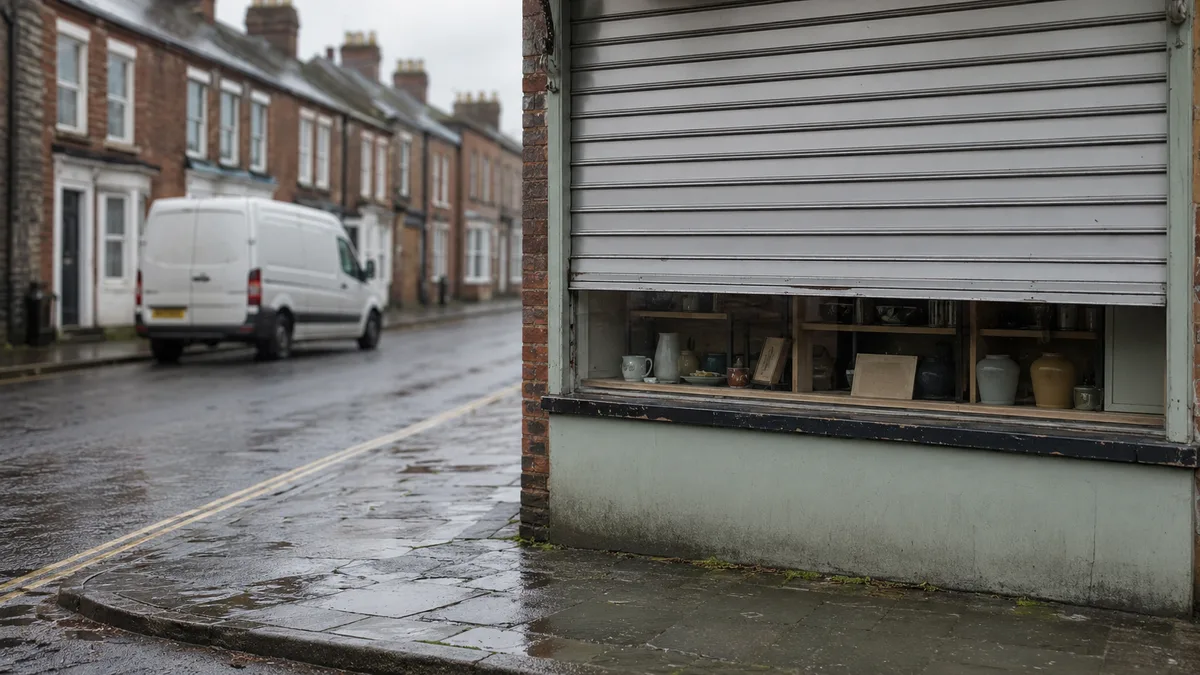
Send one dated email setting out exactly what you need and by when, so the silence stops being ambiguous. While you wait for the reply, run the checks that decide how exposed you are: who the registrant on your domain is, whose name the hosting and email accounts are in, and when the last backup ran. If the answers come back wrong, or no reply comes at all, this becomes a recovery job, and it is smaller than it feels: your words, your photos and your web address nearly all survive the move, and the move itself should never be the expensive part.
Business email address: free email or your own domain?
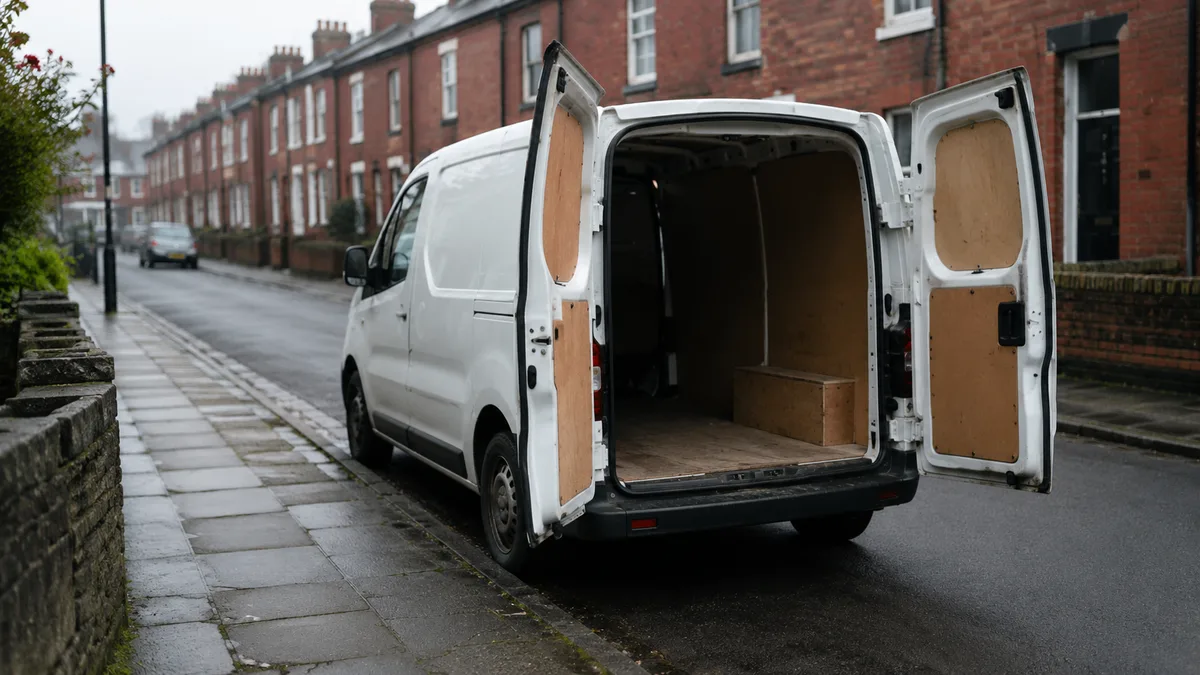
A free email address is rented: the provider's own rules can close it, an ISP address dies with the broadband it is attached to, and you cannot put the records that stop criminals sending email as you on a domain you do not own. An address on your own domain costs about a fiver a month, survives every provider change, and is the only kind you can protect and hand on. Free is fine while you are finding your feet, but set up the domain address before it is printed on invoices, cards and vans.
What the padlock on a website means (and what it doesn't)
The padlock means the connection between your visitor's browser and your website is encrypted: nobody in between can read or change what passes along it. It says nothing about who is at the other end, which is why phishing sites carry padlocks too. Treat it as the floor under a website rather than proof that the business behind it is honest.
Why is my website slow?
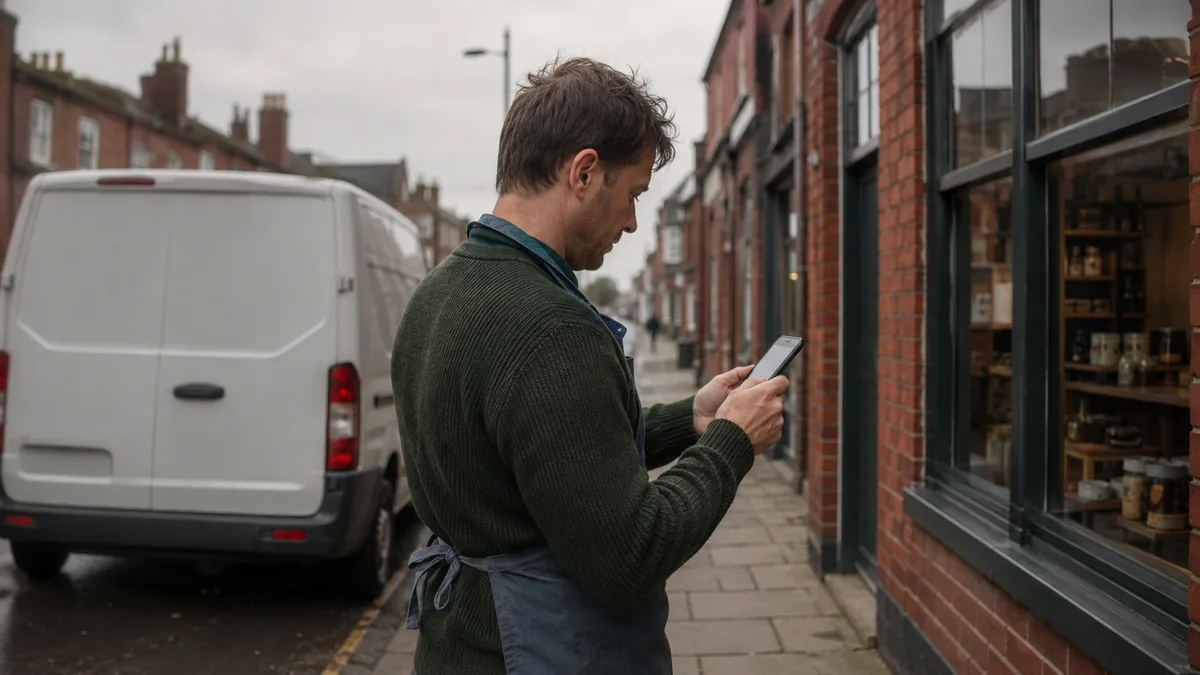
A slow website is almost always down to one of three things: images that were never compressed, hosting that is cheap or overloaded, or scripts and plugins the page carries but barely uses. Google's own research found that as mobile load time goes from one second to three, the probability of a visitor bouncing, meaning leaving without going any further, rises by 32%. The fix is rarely a full rebuild; most of the drag sits in things that can be changed without touching the design, once somebody actually looks.
Who owns your domain name (and how to check)
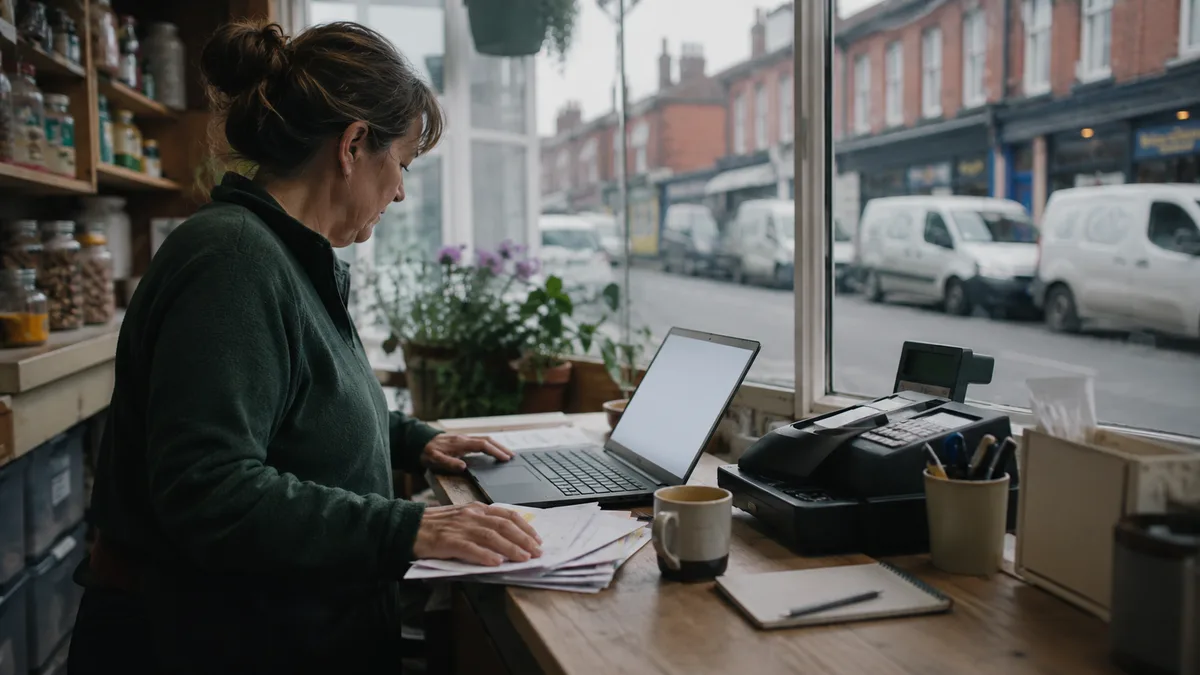
The registrant named on the domain's registration record is its legal owner, and for a lot of UK small business domains that name is not the business itself. A public WHOIS search will not settle it either, because Nominet does not publish the registrant's name or address for a .uk or .co.uk domain without consent; the only reliable check is logging in directly to the account at the registrar and reading who the registrant actually is.
Facebook page vs website: does your small business need both?
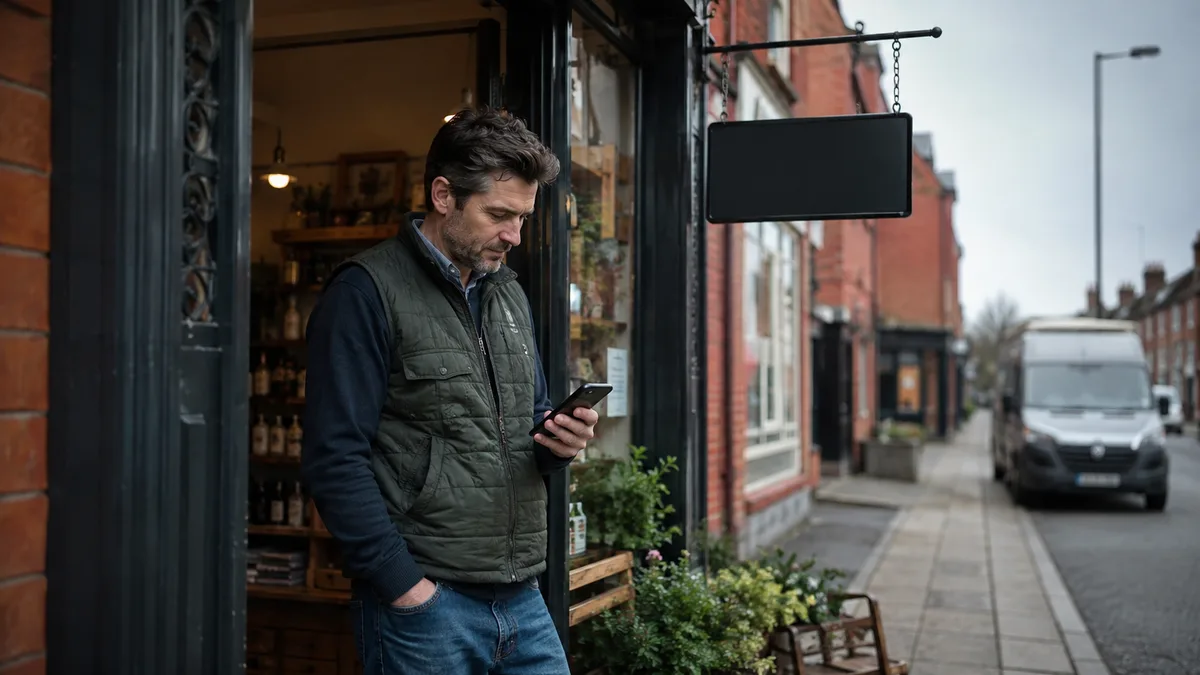
For most small businesses the honest answer is both: keep the page for the people who already follow you, and put a simple website of your own where strangers actually look, which is Google. If nobody new ever needs to find you, the page alone really can be enough.
How to get more Google reviews without breaking the rules
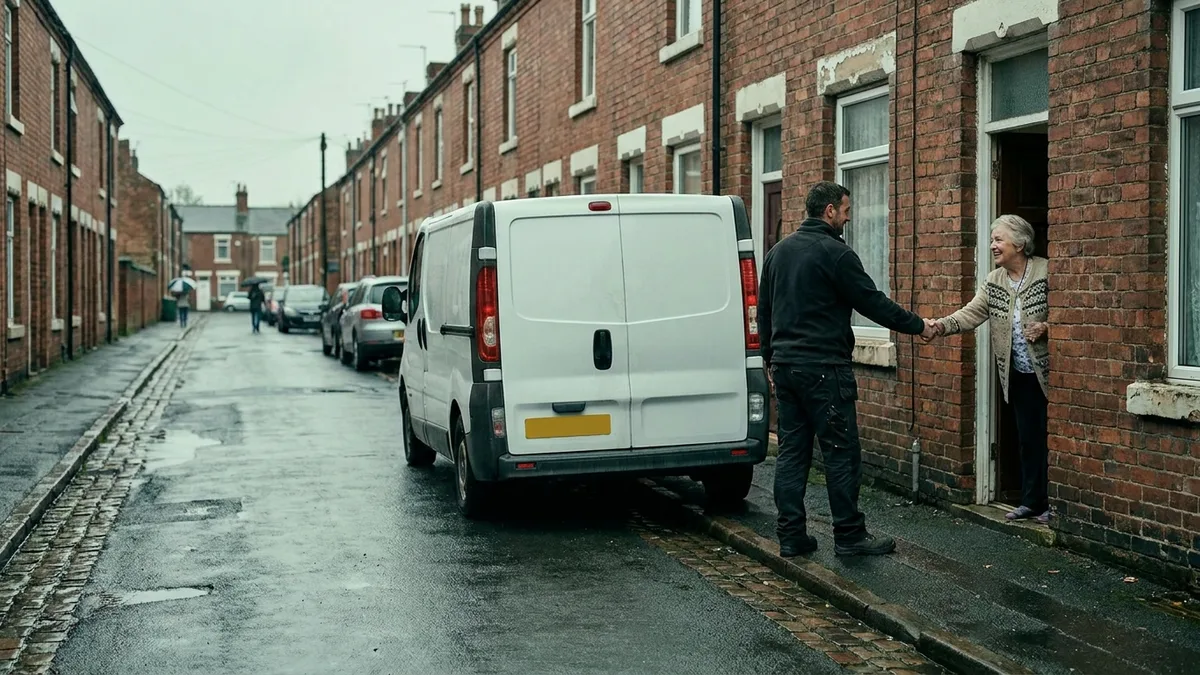
The reliable way to get more Google reviews is to ask every customer, one at a time, at the moment the job finishes, with a link straight to the review box. No incentives and no cherry-picking, because both now break consumer law as well as Google's rules.
The free Google listing that does the heavy lifting
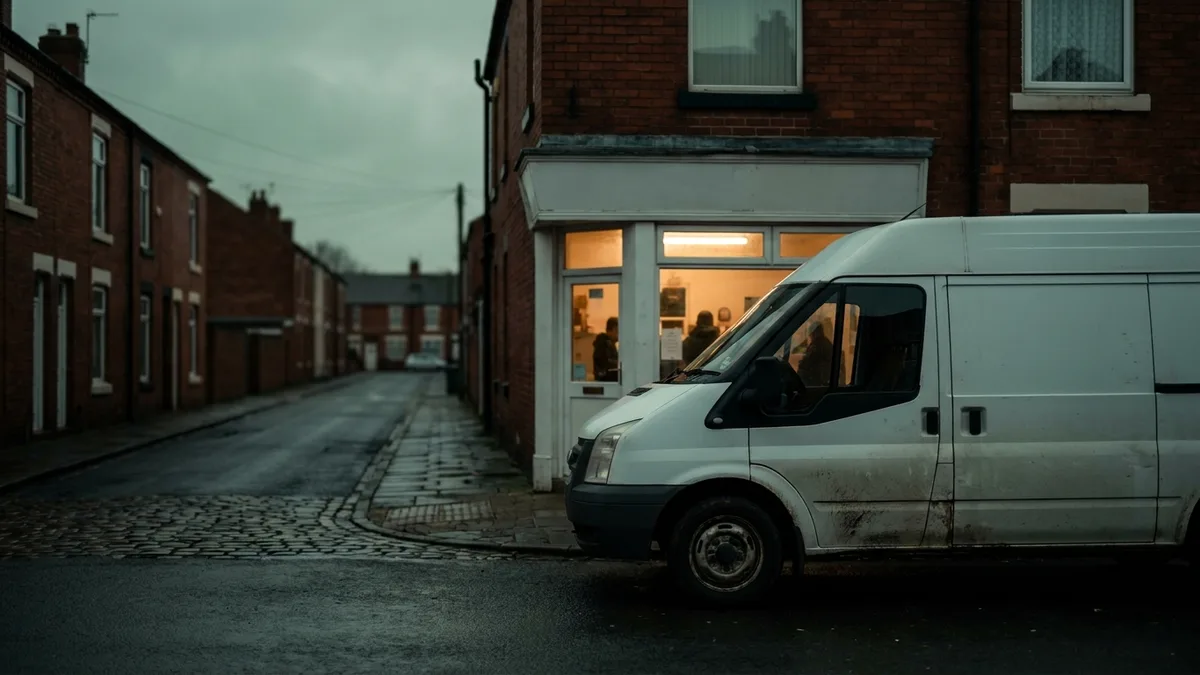
For a plumber in Boston or a cafe in Louth, the map results often decide who gets the call before any website has loaded. How to claim the free listing, what to put in it, and the fifteen minutes a week that keep it working.
How much does a website really cost a small business?
Ask three people what a website costs and you can get numbers a hundred times apart. What the 2026 ranges actually mean, what the quotes quietly leave out, and the questions that stop you paying for the same site twice.
Invoice Fraud: The Bank-Detail Switch Scam
An email arrives saying the bank details on an invoice have changed. It reads exactly right, and it is one of the most expensive lies a small business can act on. How the switch works, and the one habit that beats it.
Website For Tradesmen: A Practical Guide For Roofers, Builders, Plumbers And Electricians
Most customers now check you out online before they call, even after a recommendation. Here's what a tradesman's website needs to do to earn the job.
The Small Business Website Security Checklist
Nine things worth checking on a small business website, in the order they actually matter. Most take an afternoon, and the first one takes about ten seconds.
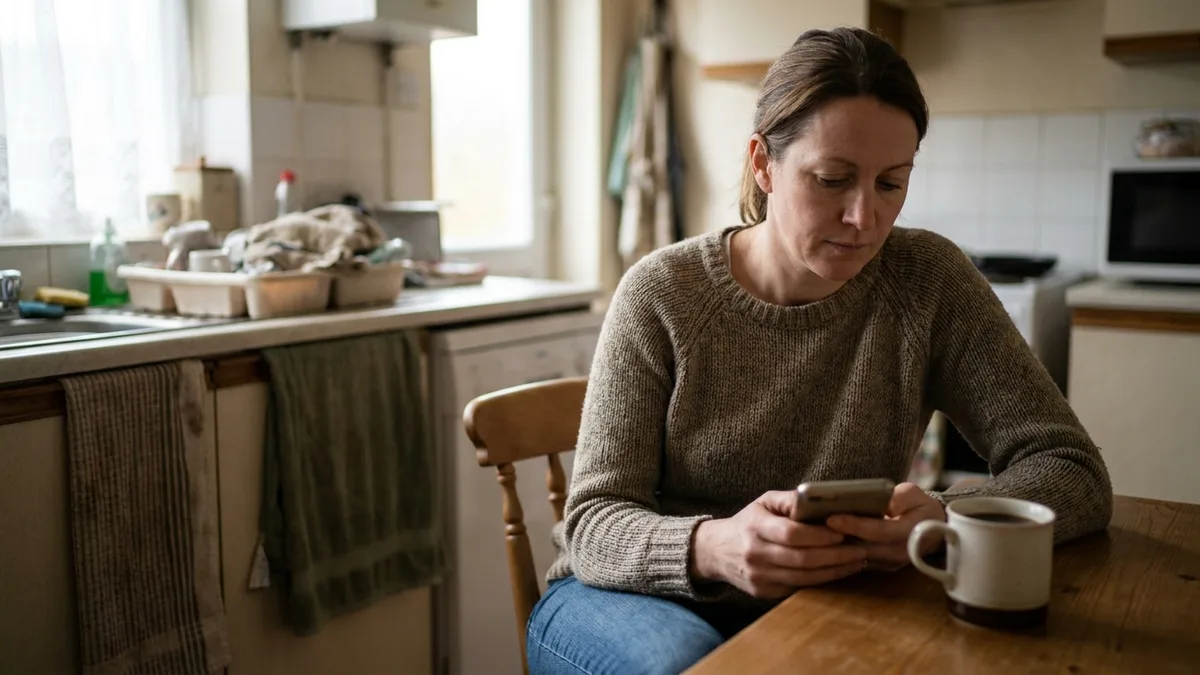
What A Website Actually Does For A Small Business
Most owners are sold a website as a way of getting found. That is the smallest part of what it does. Here is the job it actually performs, and why that job got more important this year.

What Your Website Needs To Look Secure And Trustworthy To Customers
Customers judge whether they trust your business within seconds of landing on your website. Here is what actually builds that trust, and what quietly destroys it.
Why criminals can send email as your business
A fake invoice that reads exactly like yours can cost a customer and a reputation in one morning. Why email makes impersonation easy, and the three records that shut it down.
What is DMARC? A plain-English guide for business owners
DMARC is the instruction you give every inbox about email pretending to be you. What the three policy settings mean, why monitoring mode is not protection, and the rollout order that never loses real mail.