"Local SEO" sounds like a product
Local SEO is a phrase that usually arrives attached to something for sale. It turns up in an agency's cold call, or in a listicle promising to grow your business, and it is dressed up to sound like a service nobody could manage without. The plain version is smaller. Local SEO is the work of showing up when somebody nearby searches for what you do, the local slice of what SEO actually means.
The expensive version exists, and in a crowded city it is not a waste of money. Where twenty rivals trade within a mile of each other, the fight for the map is real, and there is genuine work in winning it. The guides that come back for that search are written for that fight, because that is who writes them. A village or a market town is a different market. The nearest competitor is often a twenty-minute drive away, and most of the patch has not done the work described below.
What follows works through the three factors Google names for local results, in Google's words, and asks what each means when customers are scattered across villages rather than concentrated in a town. Then it gives the order to do the work in, and the honest answer to how long it takes.
The three things Google says decide who shows up on the map
Search for your trade and the nearest town the way a customer would, and look at what comes back first. Usually it is a map with three business names under it, each carrying hours, photos, a rating and a phone number, and most of the choosing happens right there, before any website has loaded. The searching itself happens on Google almost every time: StatCounter's figures have Google handling roughly nine in ten search-engine visits worldwide.
Google's own help page is blunt about what sorts local results: "Local results are mainly based on relevance, distance, and prominence". Relevance is how well a profile matches the search. Distance is how far the business is from the searcher. Prominence is how well known the business is, which Google says draws on signals such as the number of websites linking to it and its review count: "More reviews and positive ratings can help your business's local ranking."
Two of the three are yours to work on. Relevance is saying plainly, on the profile and the website, what you do and where you do it. Prominence is a profile that is not abandoned and reviews that keep arriving.
The third, distance, is the one you cannot change, and in a village it is the one working for you. The searcher standing on your street is as close to you as a customer can be, and when the nearest competitor is a drive away, everybody else answering that search is a long way off. It only works that way while your profile exists and is complete, because a business that does not appear cannot be the near one. Google adds one line worth reading twice: "There's no way to request or pay for a better local ranking on Google." Nobody can buy their way above you on the map either.
Your patch is not one postcode
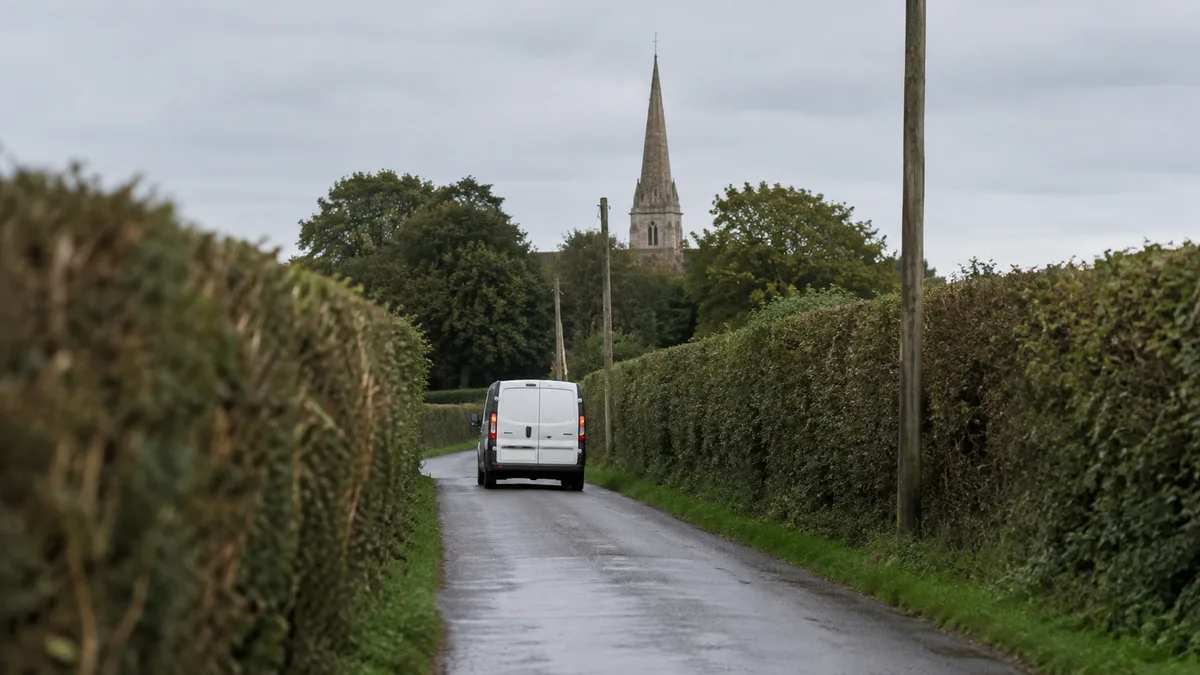
Relevance starts with deciding what "near" means for you, and the agency guides are little help because they assume customers packed inside one town. Out here the patch is usually a scatter: a market town, the villages around it that lost their own shop years ago, a caravan site on the coast. Naming that patch honestly is most of the relevance work, and it happens in two places.
The first is the profile. A Google Business Profile can list up to 20 service areas, which is more than enough for a dozen villages and the town between them. The areas cannot be set as a radius around the business, so "everywhere within ten miles" is not something the profile can express: you list the villages by name instead. Google's guideline is that the boundaries of the overall service area should not extend more than about 2 hours of driving time from where the business is based, and a village patch rarely comes close to that. List the villages you genuinely serve and leave out the ones you would secretly rather not drive to.
The second is the website. A page saying which towns and villages you actually work in, written the way a customer would say them, is the site half of the same signal. The web design in Lincolnshire hub is that method in practice: it shows how I name towns and villages across the county, and how the profile and the site are meant to back each other up. The web design in Spalding page is a second instance: one town and its food trade, named in plain sentences. On your own site the scale is smaller, which is the point: the villages you serve, named in sentences.
Prominence is mostly not abandoning the profile
Prominence sounds like the factor you can do least about. You are as well known as you are. What Google reads, though, is ordinary: photos on the profile, opening hours that are right, the odd post, and reviews. A listing untouched for two years reads as a business that may have stopped trading. One with a review answered last week reads as one that has not.
Reviews do more work where competitors are few, because a short panel gives a customer little else to weigh, and the expectations around them keep rising. BrightLocal's Local Consumer Review Survey, published in February 2026, reports that 97% of consumers read reviews for local businesses, that 68% will only use a business with four or more stars, and that 74% look for reviews written in the last three months. The strictest figure moved fastest: 31% will only use one rated 4.5 or better, up from 17% the year before. One discount applies before taking any of it as a measurement of your customers: the survey's sample is 1,002 adults in the United States, so it describes what consumers expect rather than what has been measured here. The direction of it still lands, and the number to act on is the recency one, so a trickle of fresh reviews beats a pile of old ones.
None of it needs a strategy, just the ask at the moment the customer is pleased, made easy enough that saying yes is one tap. How to get more Google reviews without breaking the rules covers the asking properly. The guide to the Google Business Profile covers the first half of the work, claiming the listing and filling in every box.
The website the signal can carry
There is one more reason the website itself belongs in a piece about local visibility, and it is specific to villages. The customer checking you out may be standing in a lane or sitting in a caravan park on whatever signal is going, deciding between you and the next name on the map. If the page will not load, the next name gets the check.
The gloomy version of rural signal that people repeat is out of date, and it is worth being accurate about it. Ofcom's Connected Nations update for spring 2026, published in May 2026, put predicted 4G geographic coverage of the UK landmass from all four mobile network operators at 84%, up from 66% before the Shared Rural Network programme began, and coverage from at least one operator reaching 96%. The gap between those numbers is where your website earns its keep: nearly all of the landmass has a signal from somebody, and less of it has a signal from everybody. A customer on the operator that does not reach their lane is making do.
A light site is what makes do with them. Nothing about that is a technical project: pages that carry only what they need, and images sized for a phone. Why is my website slow works through what slows a small site down and how to check yours for free.
What to do this week, in order
Claim the profile if it has never been claimed, and take it back if somebody else holds it. Fill in every box, starting with the category. Set the service areas to the villages you serve. Put the same village names into the website's own sentences. Ask two pleased customers for a review, today's two rather than the best two from last year.
Then leave it alone for a month. Nothing on that list decays in a month, and the profile is built to keep working while you get on with the actual work. The owners who lose at this are the ones who set it up in a good week and never come back, and the ones who fiddle with it daily. Neither is you, probably, if you have read this far.
How long this takes, and when to get help
The honest part first: months, not days. None of the lists above produce a map result in a fortnight, and anyone who quotes you a precise date is guessing or selling, because Google will not even sell one. Judge it by the phone: whether enquiries start arriving from people further out than the regulars.
Most of this you can do yourself, and I would rather you did. The claim, the boxes, the villages and the asking are an evening or two and then a habit. What a monthly service earns is the keeping in step: a profile tended week by week, posts written that name the right villages, reviews asked for after every job without anybody having to remember. If that is the trade you want to make, the local SEO service is the page for it, and the services page sets out everything that comes alongside it.
The questions that come up
What is local SEO in plain English? Showing up when somebody nearby searches for what you do. Google runs those results on three factors, relevance, distance and prominence, and in a village or market town most of the work is filling in the profile properly and naming the villages you serve.
Does local SEO work for a village business with no competitors nearby? Best of all, because distance is the factor you cannot change and the one already working in your favour. The catch is that it only applies while the profile exists and is complete, which is the part most of the patch has skipped.
Do I need a website, or is a Google Business Profile enough? Start with the profile, because that is where the map result lives, and a complete one picks up work on its own. The website is what a customer who wants reassuring before ringing will look for, and the only place the patch gets named in your own sentences.
How long does local SEO take to work? Months rather than days. Treat any precise timetable with suspicion, including the ones in other people's marketing, and judge it by where the enquiries come from.
How do I get my business to show up on Google Maps? Claim the listing, fill in every box, set the service areas, and collect some recent reviews. There is no separate map switch: the map results come from the same three factors as the rest of the local results.
What is a service area business on Google? One that travels to customers rather than trading from a shop they visit. Its profile lists up to 20 service areas, set by name rather than drawn as a radius, and Google's guideline keeps the overall area inside about 2 hours of driving time of where the business is based.
How many Google reviews do I need? Google does not publish a number. What is published, in the BrightLocal survey above, is what consumers expect: 68% will only use a business with four or more stars, 74% look for reviews written in the last three months, 89% expect a business to respond to reviews and 81% expect a reply within a week. The honest target is a trickle, answered.
Can I do local SEO myself, or do I need to pay someone? You can do the whole of the list in this piece yourself. What people pay for is the habit rather than the knowledge: the profile kept in step and the writing done weekly. If the list is still sitting there untouched in three months, that is the sign to hand it over.
If you would rather the profile and the village pages were kept in step by somebody else, that is the local SEO and blog work, included in the £79 a month plan.