What happens if the page is gone tomorrow
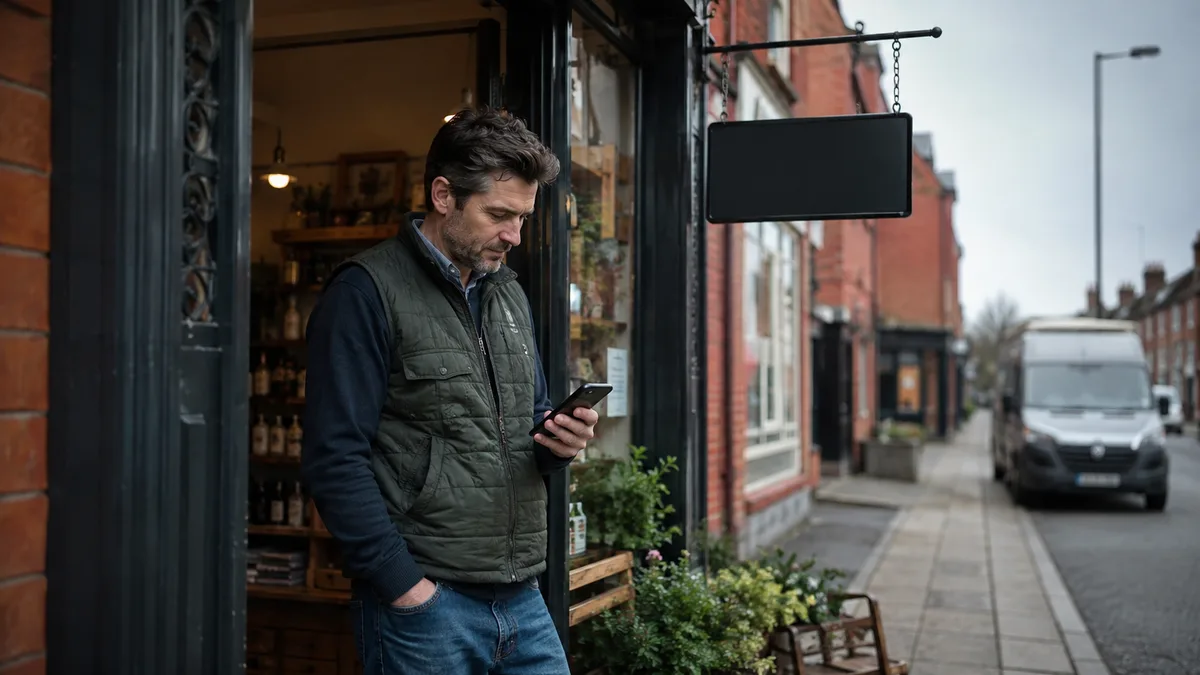
Most advice on this question starts in the wrong place. It asks whether you need a website when you already have a Facebook page, then hedges towards yes because hedging is the safe thing to write. Ask a sharper question instead. Log in tomorrow and find the page suspended, hacked, or switched off by Meta with no warning and no one to ring. Does that lose you the business, or does it lose you a noticeboard?
That question splits small businesses into two honest camps. One loses nothing worth worrying about: a sideline sold entirely to people who already know you, a stallholder whose regulars would simply text instead. The other loses the only place a stranger could ever have found them, checked they were real, or worked out roughly what they charge. Which camp you're in decides whether anything below changes what you do next.
What a Facebook page is good at
Credit where it's due. A page costs nothing, takes an afternoon to set up properly, and for a business whose entire customer base already follows it, that's a perfectly good use of the time. If your work comes from word of mouth and the odd share among people who already know you, a page that posts what you're up to and answers messages promptly is doing its job. There's no need to spend money fixing something that isn't broken.
The test isn't whether the page works. It's whether it's the only door. A hairdresser whose bookings all come from regulars who already have her mobile number is in a different position to a plumber hoping a stranger searching for a plumber in Boston at eleven at night finds him. The page can be enough for the first and not enough for the second, and neither of them is wrong about their own business.
Where it runs out
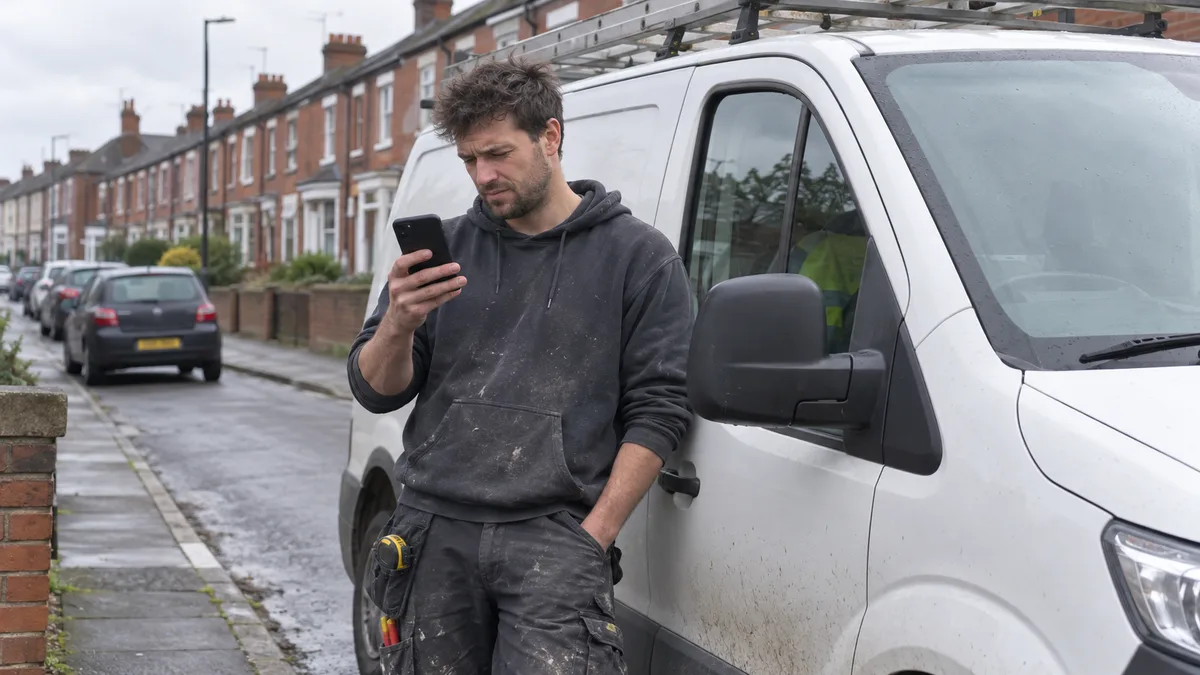
The first gap is search. Nine in ten searches happen on Google, not inside Facebook, and StatCounter's figures have held roughly there through 2026. A Facebook page is built to be found by people already inside Facebook, following you or a friend who follows you. Someone typing your trade and their town into Google, with no Facebook account open, most often will not see you at all.
The second gap undercuts the idea that a page keeps working just by existing. Socialinsider's 2026 benchmarking report, built from 25 million Facebook posts published across 2024 and 2025, put the average engagement rate on a Facebook Page post, likes, comments and shares combined, at 0.15% of its followers. That isn't a reach figure and it isn't a claim that Facebook is dying. It's a plain measure of how many people who already chose to follow you actually interact with what you post. A shop window that only a sliver of passers by glance at is still a shop window. It just isn't doing much.
The third gap is what a page simply can't do. It's an awkward place to send someone who wants a proper price, there's no form for a job that needs real details rather than a comment, and it can't hold a clear FAQ that answers the obvious question before the phone rings. What a website actually does for a small business goes through the jobs a site does that a social page structurally can't.
The middle ground most businesses actually want

None of this means abandoning the page. The businesses that get this right run both and give each one a different job. The Facebook page stays exactly what it's good at: a noticeboard, a quick photo of a finished job, a place regulars already check. The website becomes the shop window, answering a stranger's first questions, what you do, where, and roughly what it costs, before they've decided whether to ring.
That's the honest version of when a page is enough. It's enough on its own for a business whose whole customer base already follows it. It starts costing you work the moment even one customer who doesn't already know you goes looking, because that's the exact moment a Facebook page can't be found and a website can.
What it costs to fix, and the ownership problem underneath
The lockout point is worth taking seriously rather than filing under unlikely. Guides on regaining access to a locked or suspended Facebook Business Page are common enough to be their own small niche: a personal account gets disabled and takes the linked Page down with it, an admin leaves and nobody else was ever added, a Business Manager gets blocked and every Page under it goes dark at once. None of that requires you to have done anything wrong. It requires only that you never owned the thing in the first place.
That's the wider point this site makes about domains and email too: don't put anything you can't afford to lose on ground you're renting. A website you actually own starts at £49 a month, or £490 a year paid upfront, VAT included. That covers up to five pages, a build that works properly on a phone, hosting with daily backups and an SSL certificate, and your own domain and business email included and renewed for you, set up so it's hard for anyone else to fake. See the full plan on the pricing page. None of it depends on a platform's decision about your account.
Where to go from here
If the honest test in the first section put you in the camp that's fine on a Facebook page alone, that's a legitimate answer. Keep doing what's working. If you landed in the other camp, the fix isn't dramatic: keep the page, add a simple site that does the job the page can't, and let each one do what it's actually good at.
If your customers are mostly local, the web design in Lincolnshire hub goes through what that looks like for towns across the county, and how the two are meant to work together rather than compete. Search is how the newcomer, the visitor and the recommendation-checker find a village business the Facebook page never reaches, and local SEO for village and market-town businesses covers that half.
Still relying on Facebook alone? See what a simple website of your own actually costs, and what's included in the monthly price.