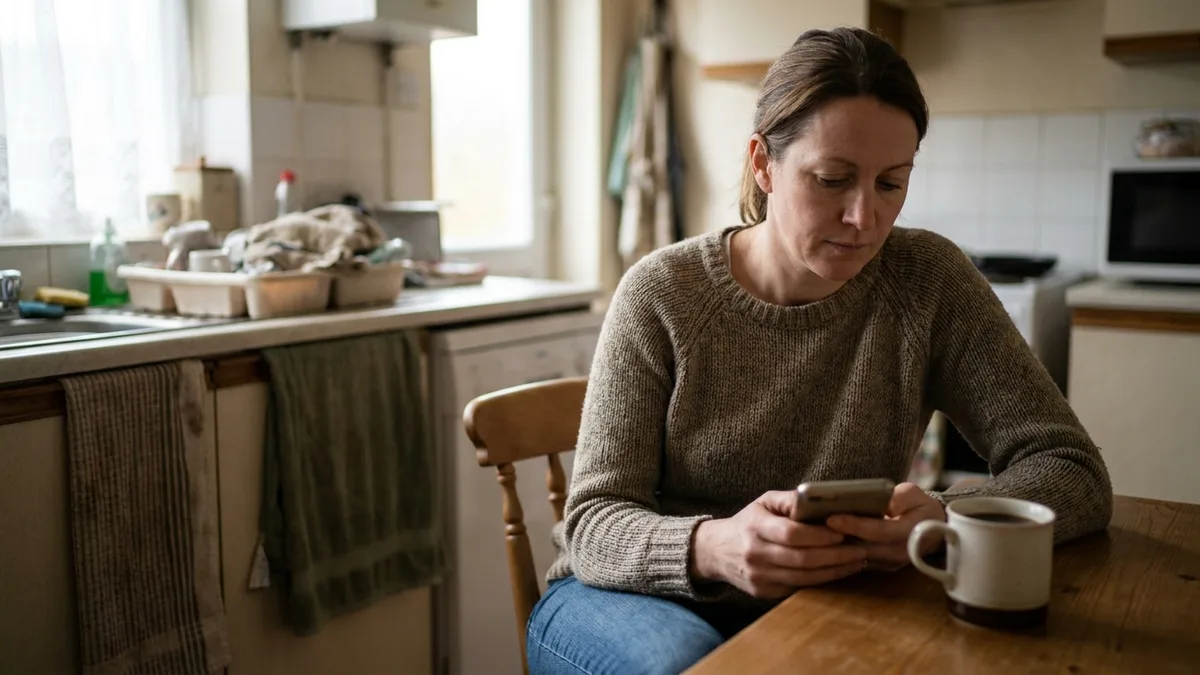
The honest answer is not "it gets you found"
Ask most people what a website is for and you will get some version of "so customers can find me on Google". That is a real benefit, but for a small local business it is rarely the part that earns the money back. Plenty of tradespeople in Lincolnshire get more work from a van sign and word of mouth than they ever will from a search ranking, and they know it.
The more useful way to think about it is this. Your website is not usually where people discover you. It is where they go to decide about you. Every other channel you use, the recommendation from a neighbour, the Google listing, the Facebook post, the review someone read, all end up pointing at the same place. What happens when they arrive is what decides whether you get the call.
Where your customers actually arrive from
BrightLocal's 2026 Local Consumer Review Survey is worth a look if you want the current picture rather than the one from five years ago. It found that 97% of consumers now read reviews for local businesses, and that 41% always do, up sharply from 29% the year before. Google is still the most commonly named place people go for a local recommendation at 71%, though that is down from 83% the previous year.
The number that should make every small business owner sit up is a different one. Asked where they turn for local recommendations, 45% named AI tools such as ChatGPT, up from 6% a year earlier. That is not a gentle trend. That is a channel going from a rounding error to nearly half the market in twelve months.
And after reading a positive review, 54% of people go on to visit the business website, compared with 32% when the same question was last asked in 2019. Only about a third are ready to buy or book straight away. The rest go looking for more, and your site is where they look.
What people are actually checking when they land
Here is the uncomfortable bit. In those first few seconds nobody is reading your carefully written paragraph about your commitment to quality. They are doing something much blunter. They are checking whether you are real, whether you are still trading, and whether you cover their village.
That means the things that look boring are the things doing the work: a real address, a phone number that is easy to find, a photograph of an actual person rather than a stock image of somebody else's electrician, recent reviews, and a clear list of the areas you cover. Get those wrong and the best copy in the world will not rescue it. We wrote about this in more detail in what your website needs to look secure and trustworthy, which covers the trust signals customers react to whether or not they could explain why.
The jobs a website does that nothing else can
It answers at nine o'clock on a Sunday night. A good proportion of enquiries to local trades are formed outside working hours, when someone has just discovered a leak or finally sat down to sort out the extension. You are not going to answer the phone then. Your website will.
It filters. A page that says plainly what you do, what you do not do, and how far you travel will quietly turn away the enquiries that were never going to become jobs. Most owners underrate this. An hour a week not spent explaining that you do not cover Nottingham is an hour back.
It holds the proof. Photographs of real finished work, reviews, qualifications, insurance, the year you started. None of that fits in a Google listing, and none of it survives being retold second hand by a customer recommending you to a friend.
And it belongs to you. A social media page sits on land you are renting from a company that can change the rules, throttle your reach, or suspend the account with no warning and no one to ring. Your domain and your site are yours. If you want to see what that looks like in practice for local firms, the portfolio has real examples.
The new job: being readable by machines
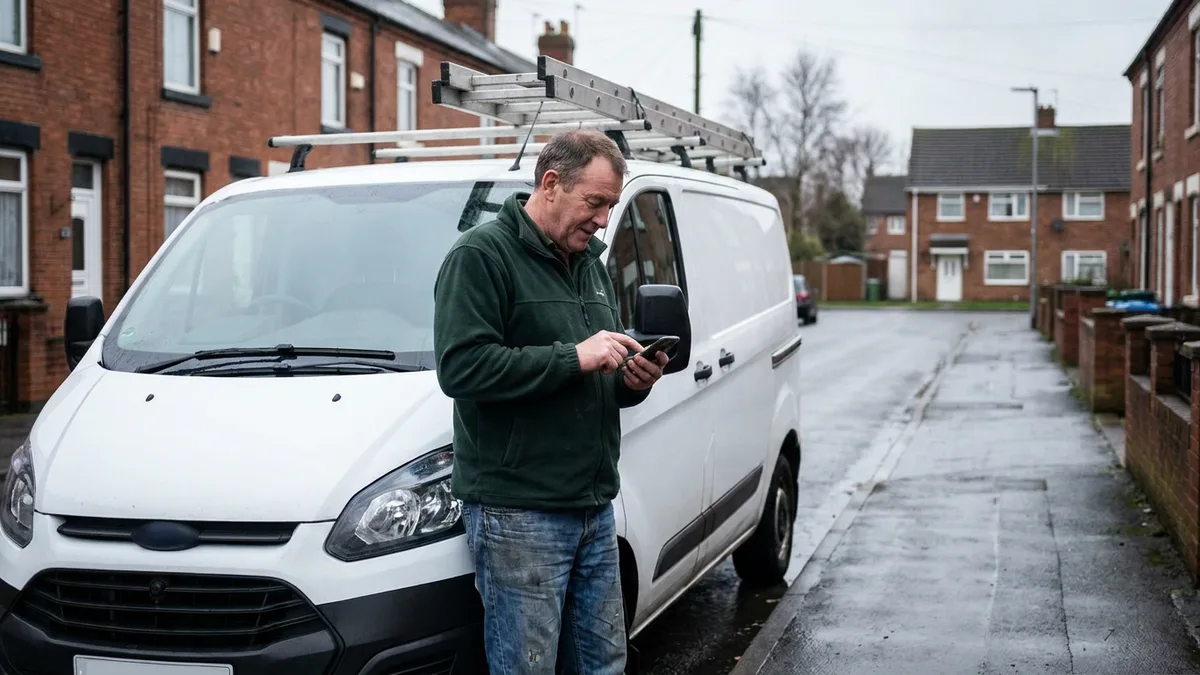
That 45% figure changes something practical about how sites need to be written. When somebody asks an assistant for a recommendation, the assistant is not looking at your logo or your hero photo. It is reading text, and it can only recommend what it can find and understand.
In practice, businesses that state the plain facts clearly, what the service is, which towns it covers, what it costs, how to make contact, get picked up and quoted. Businesses whose information lives only inside a social media page, an image, or a PDF often do not. This is not about tricking anything. It is the same discipline that makes a page useful to a human in a hurry, applied somewhere new.
It is also a reason the gap between having a website and having a findable one is widening. If you are not sure which side of that your current site sits on, the free security check will at least tell you whether the technical foundations are sound, and our pricing page is honest about what putting it right typically costs.
If all you have is a Facebook page
It is better than nothing, and for some businesses it genuinely brings in work. It is worth being clear-eyed about what it cannot do, though. It will not usually show up when somebody searches for your trade and their town. It is awkward to send to a customer who wants your prices. It gives you almost no room for the proof that wins bigger jobs. And increasingly it is invisible to the assistants a growing share of customers now ask first.
The sensible move is not to abandon it. It is to give it somewhere to point. The social page does what it is good at, which is reminding people you exist, and the website does the deciding. If you work in one of the trades we build for regularly, the pages for roofers and trades, pubs and restaurants, cafes and tearooms and gardeners and landscapers go through what that looks like trade by trade.
What to do next
If you already have a site, the useful exercise is to open it on your phone and read it as a stranger who has just been given your name. Can you tell what the business does, where it works, and how to make contact, within about ten seconds? If not, that is the first fix, and it is usually a small one.
If you do not have one yet, start with the honest version rather than the impressive one. A handful of clear pages that answer real questions will beat a large site nobody finishes reading. Run the free security check on your domain to see where you stand, or get in touch and we will tell you what we would do first.